


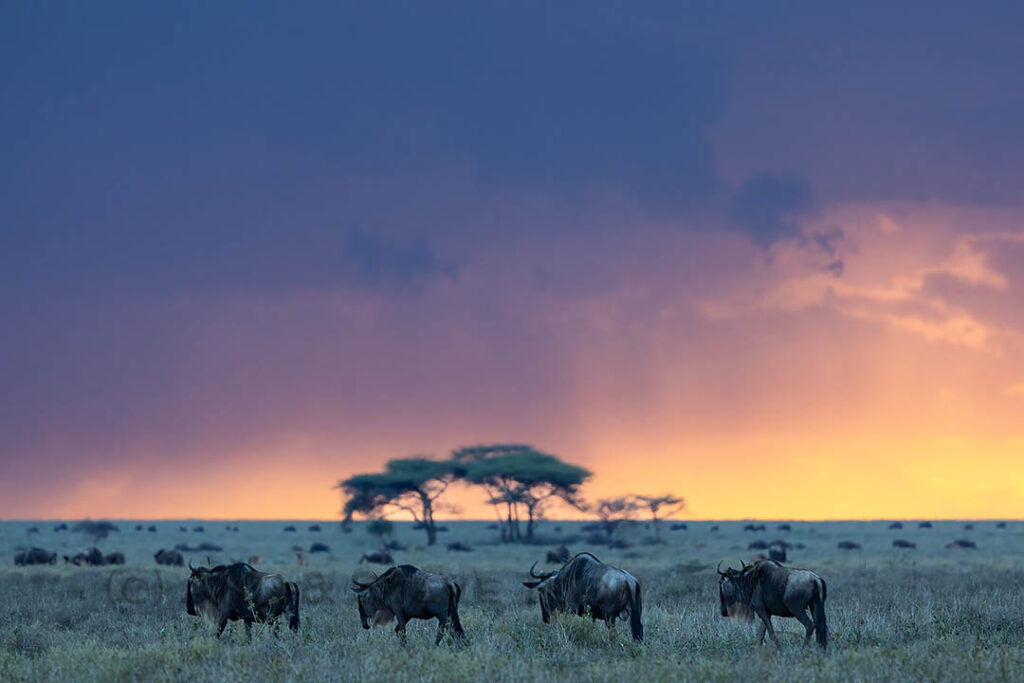
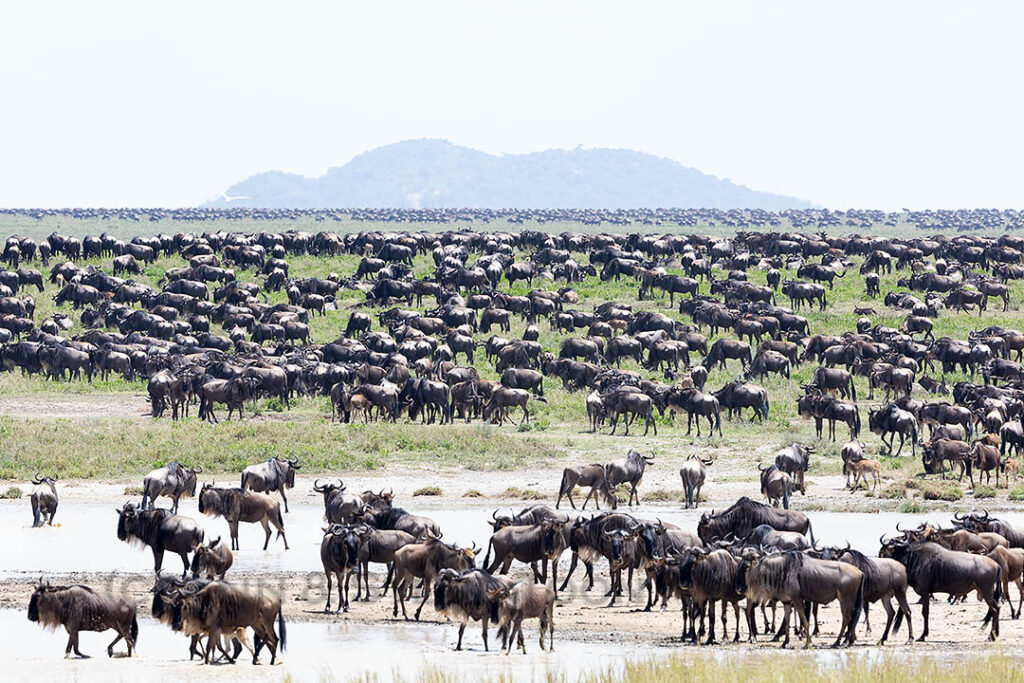
The horizon has grown eyelashes overnight. Short, dark frills rim the lids of the plain. A second glance and you might describe it more like a wobbly line of black marker pen defining the ledge where land meets sky – like a pop art print. Not there yesterday. Then the penny drops. The dark bits are wildebeest. This is it. The Great Migration…
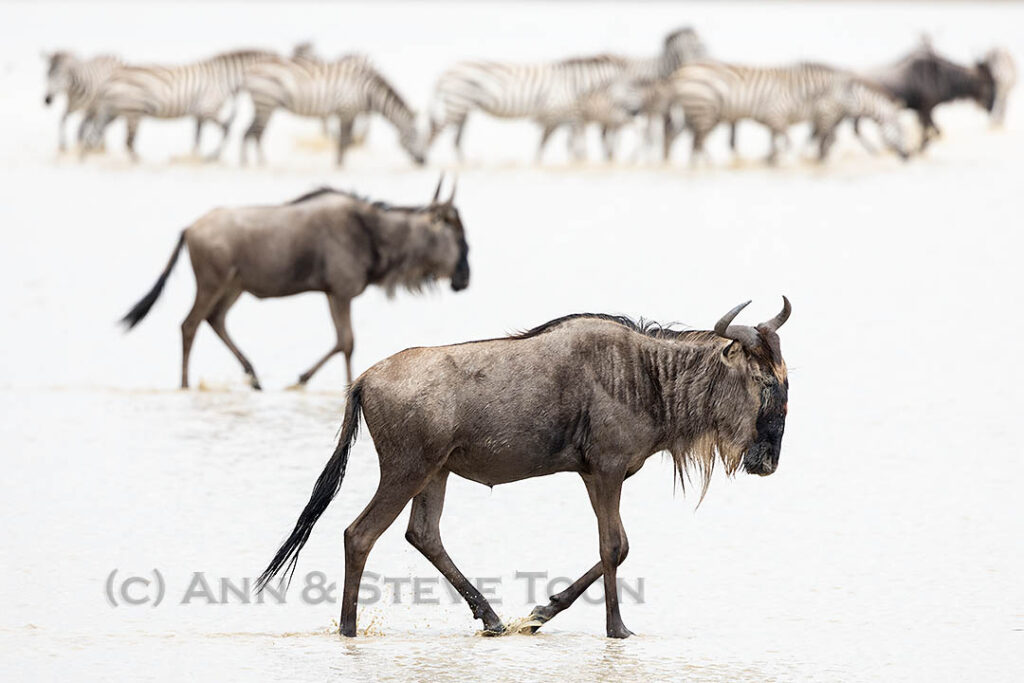
It’s stressful as much as wonderful when you come face to face with so many animals of one species herded together in one place. The emotions are unexpectedly powerful. You have a camera in your hands. You are bang in the middle of one of the world’s greatest natural wonders. It’s truly spectacular, yet you can’t do it justice. You don’t even know where to start. ‘Gnu’ sounds are breaking all around you, there’s galloping, head tossing and the drum-beat of thundering, thudding hooves. So many newborns, like miniature rocking-horses, explode into action on untested limbs, barely bruising the damp earth as they run, run, run.
It’s our first trip of 2026 and we’re kicking off our programme in Ndutu, Tanzania. It’s the peak of the Great Migration calving season. We are two groups of three, with one of us leading each sub-group. A day of good rain has brought the wildebeest back onto the plain here in jaw-dropping numbers in perfect timing for our arrival. Everything needed to raise a strong calf – water and nutrition-rich grazing – is here. Everything a watchful, following predator needs for an easy life is here also. The big cats don’t need to wait for darkness to make their strikes at this time of year. There’s the promise of rich pickings for wildlife photographers too – especially considering we can go off-road when we have a promising lead.
We’re excited to make a start, but still somehow there’s a nervousness in the air. Wondering if we’re up to capturing the sheer dramatic intensity and immensity of it all.
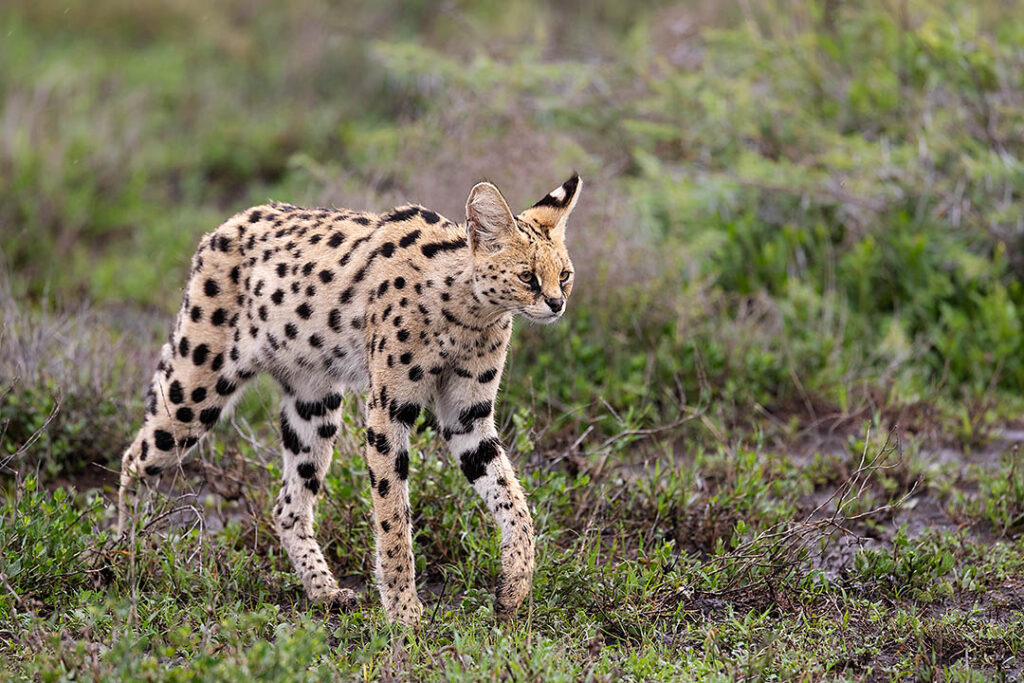
A surprise serval cat on our first morning – not the larger spotted cats we’d raised our anxiety levels to eleven for – proved the perfect nerve steadier. Nothing beats an excellent session with a special sighting to get things rolling. With some good portraits of this relaxed bob-tailed feline in the bag we relax into the rhythm of our game drives and open ourselves up to the migration’s unique, seasonal narrative; guests quickly enjoying some favourite spots for photography including Long Gulley and the wondrous Hidden Valley.
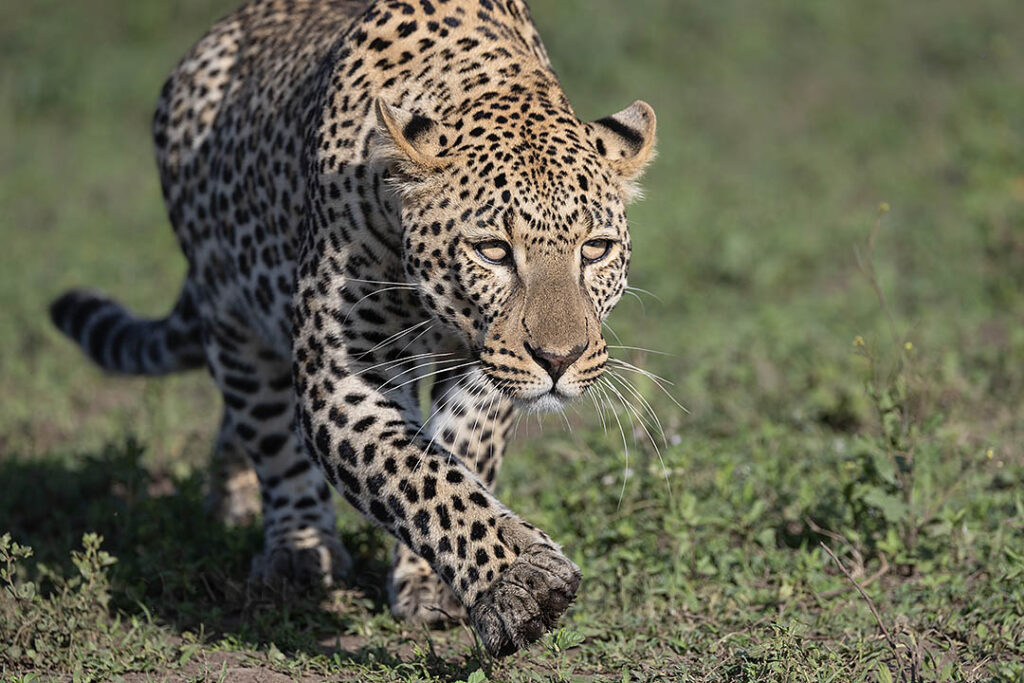
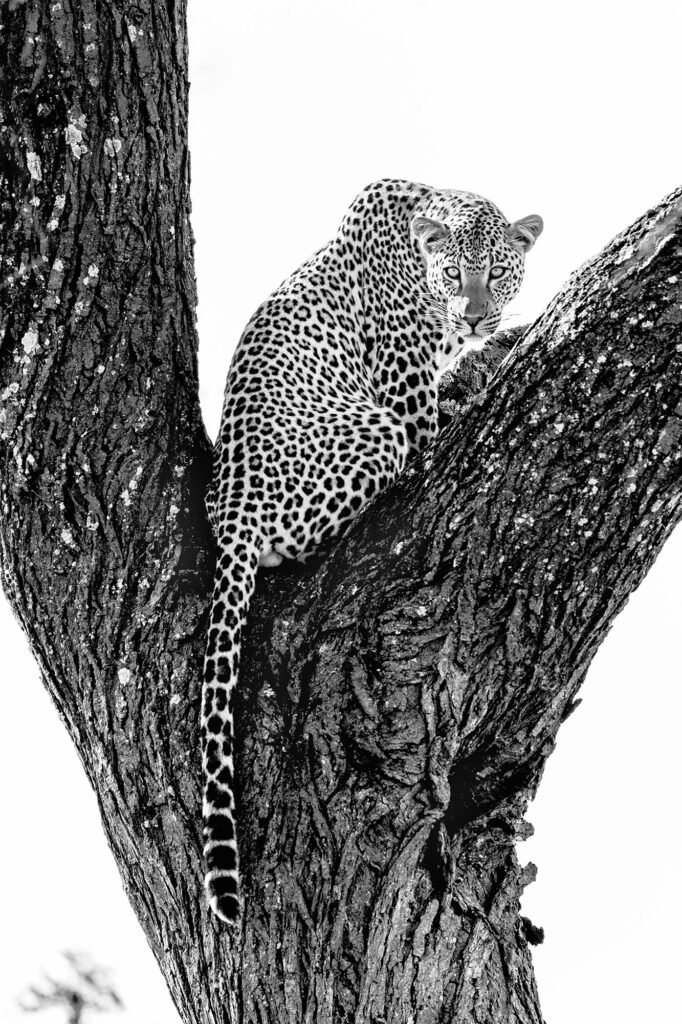
Soon we’re bumping into big cats at every turn. We have a thrilling leopard sighting the first afternoon. A male wedged beautifully in the fork of a tree poses nicely for our first high-key shots before making his graceful descent. Suddenly the adrenaline surges as the muscular cat is in full stalk and pounce mode. Our leopard is laser-focused on a tiny steenbok antelope nobody has even realised is hiding right there in the grass. It jinks to avoid the outstretched claws and executes a lucky escape, but not before our fellow shooters get some smart shots of the slinking cat stalking low to the ground.
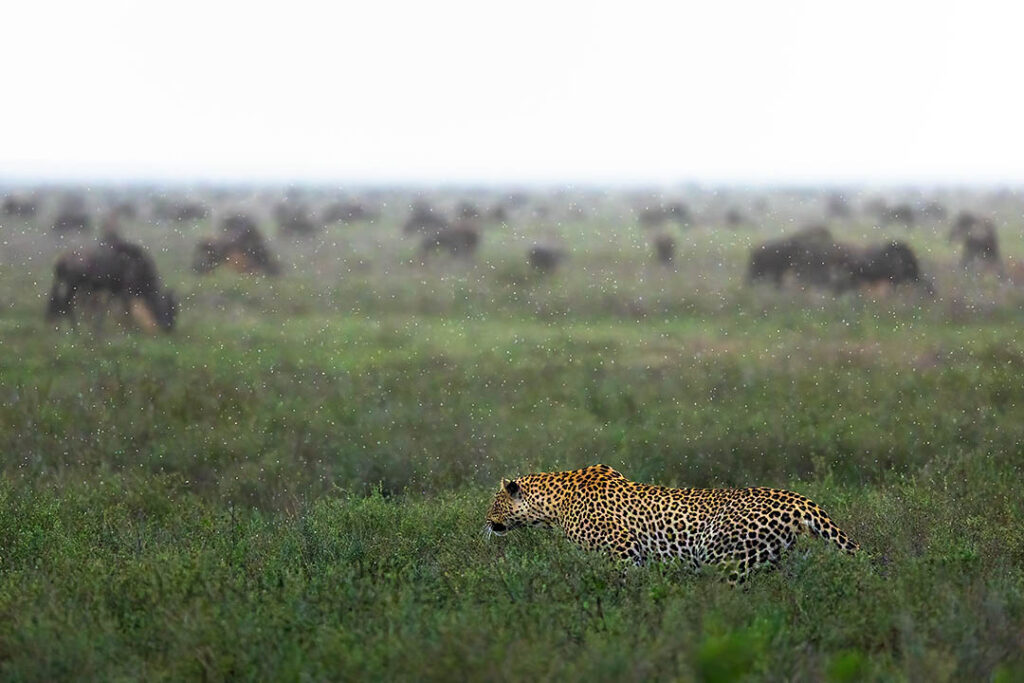
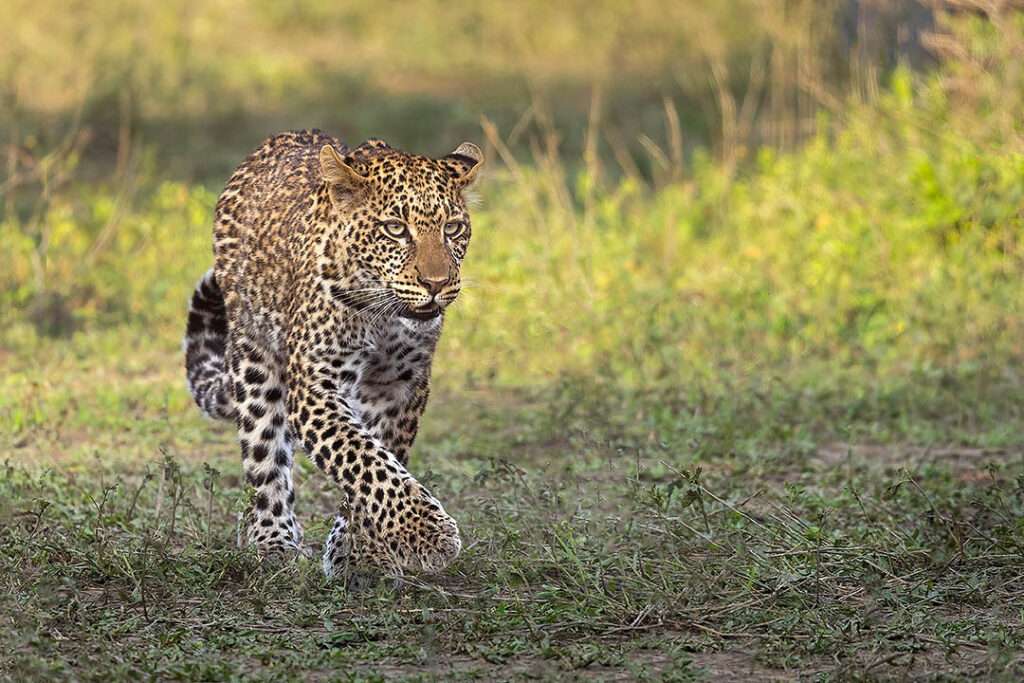
This isn’t the only hunting leopard we’re fortunate enough to witness on the trip. A day or so later we find ourselves – hearts in mouths – as another male attempts a painstaking belly-crawl across the plain – using the cover of very short scrub and a brief rain shower – towards a group of grazing wildebeest with a huddle of small calves. The episode produces more striking shots of an alert leopard in hunting mode – this time at low angle. It’s fascinating to witness the patience and poise of this stealthy cat as it tries to cover quite open ground in broad daylight. In the end the unsuspecting antelope drift just too far away, but not before we’ve all identified which youngster it was surely hoping to target.
On another occasion we watch enthralled while yet another hunting leopard stalks a reedbuck from the opposite side of a small stream. The leopard is poised and just about to jump across the gap – we’re all in place for the much-anticipated action shot – when the reedbuck suddenly spots the advancing predator and sends up the shrillest of alarm calls, deafening us all and putting a complete full stop to proceedings.
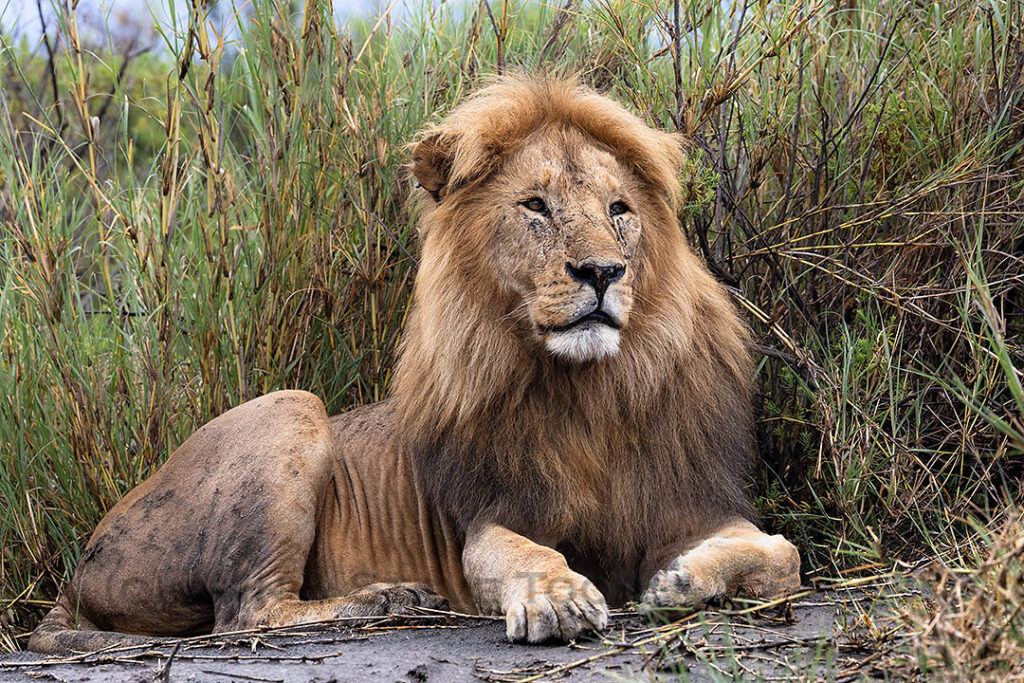
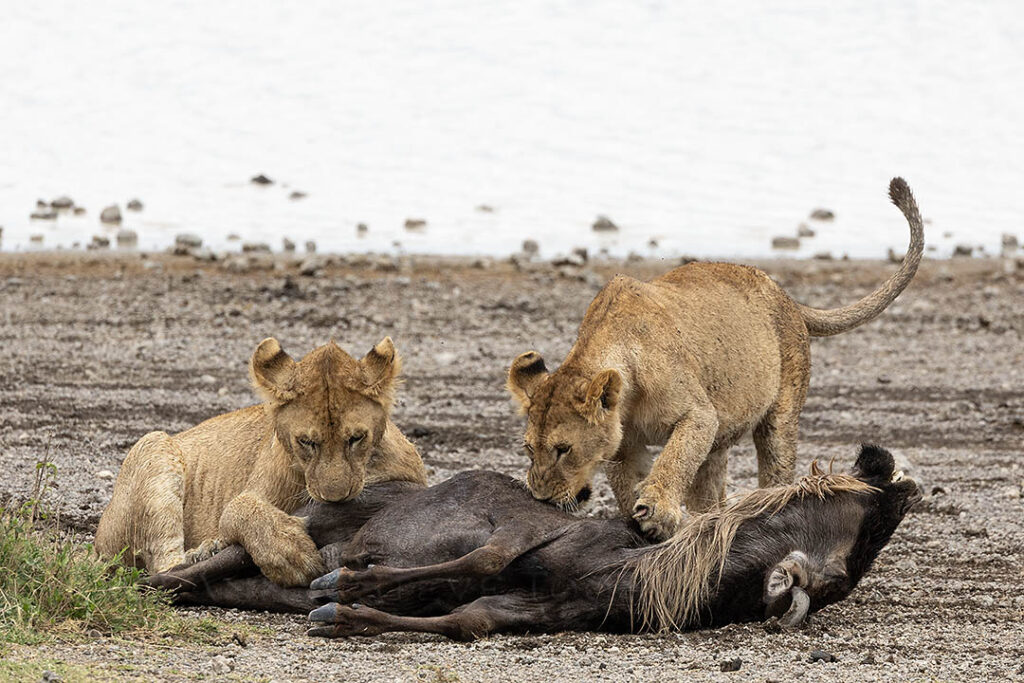
The lions, and cheetahs, prove significantly more successful in their daylight hunting during this time of plenty – certainly from the sightings we’re privileged to observe. The plains always appear littered with fresh kills as we traverse them. We’ve never seen so many tawny eagles, marabou storks and vultures (especially the massive lappet-faced variety), either adorning the trees as sinister silhouettes when roosting or draped across carcasses squabbling for the best spot at the feast. We’re never far from a flurry of feathers and fearsome talons.
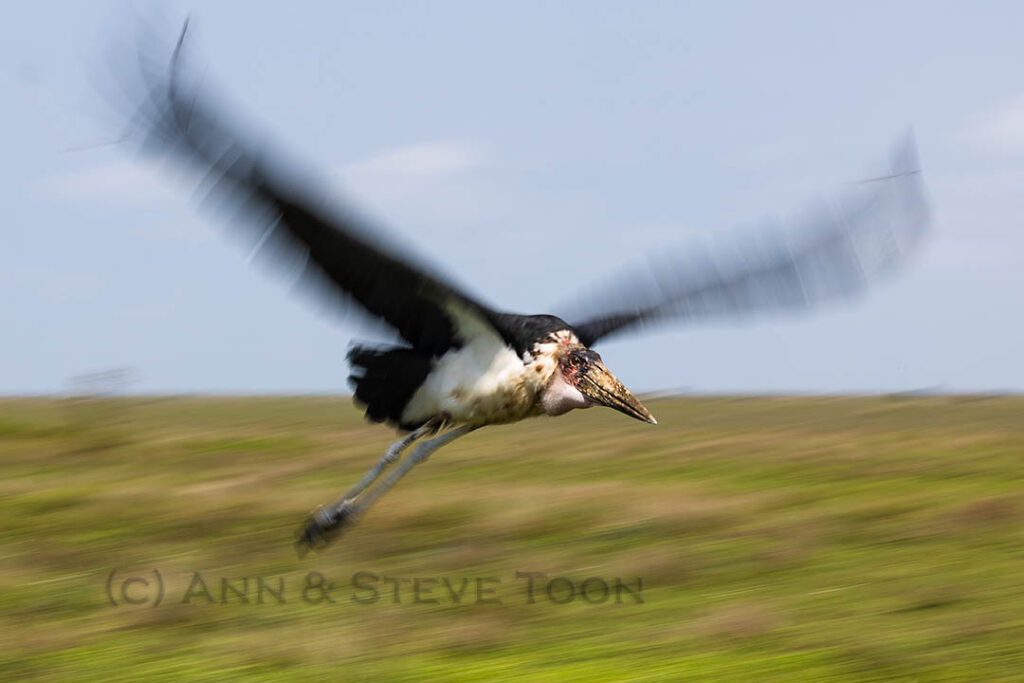
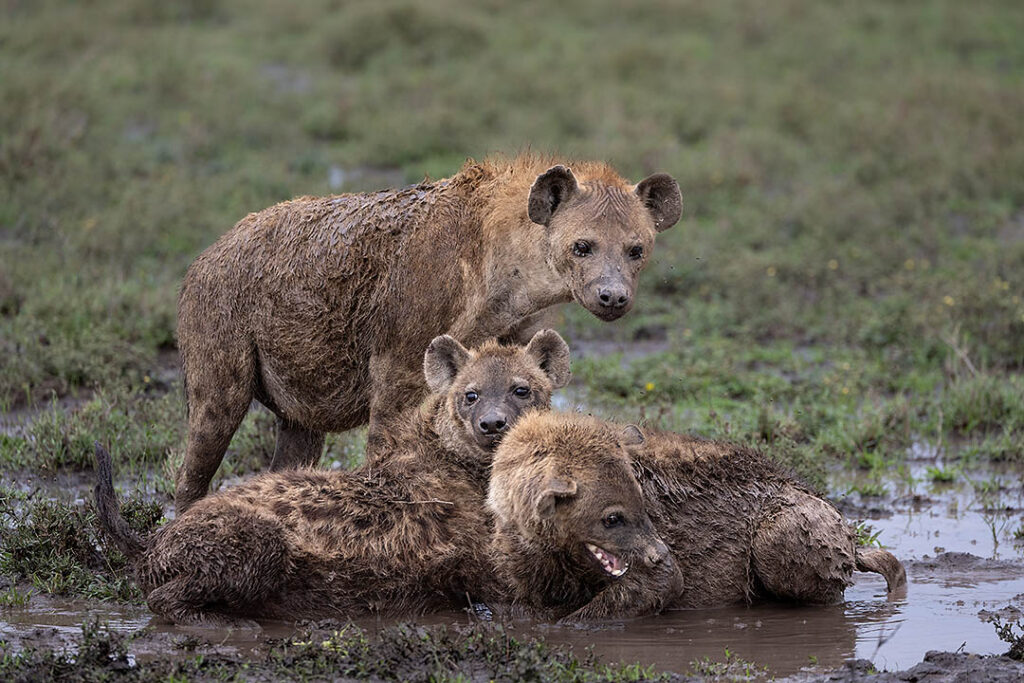
Small brown dots on the plain we quickly learn to recognise as the ever-patrolling hyenas, fat from their regular carrion clean-up missions. One moment we’re marvelling at a newly-born wildebeest’s wobbly start in life, the next training our lenses on a cheetah’s chokehold of a tiny calf it has just chased down. We ooh and aah at four of the tiniest cheetah cubs nestled in a bush and hopefully hidden from harm while the mother is off hunting. Talk about the cycle of life. We get successful cheetah chases twice and one group witnesses lions take down a zebra foal. A safari on steroids alright.
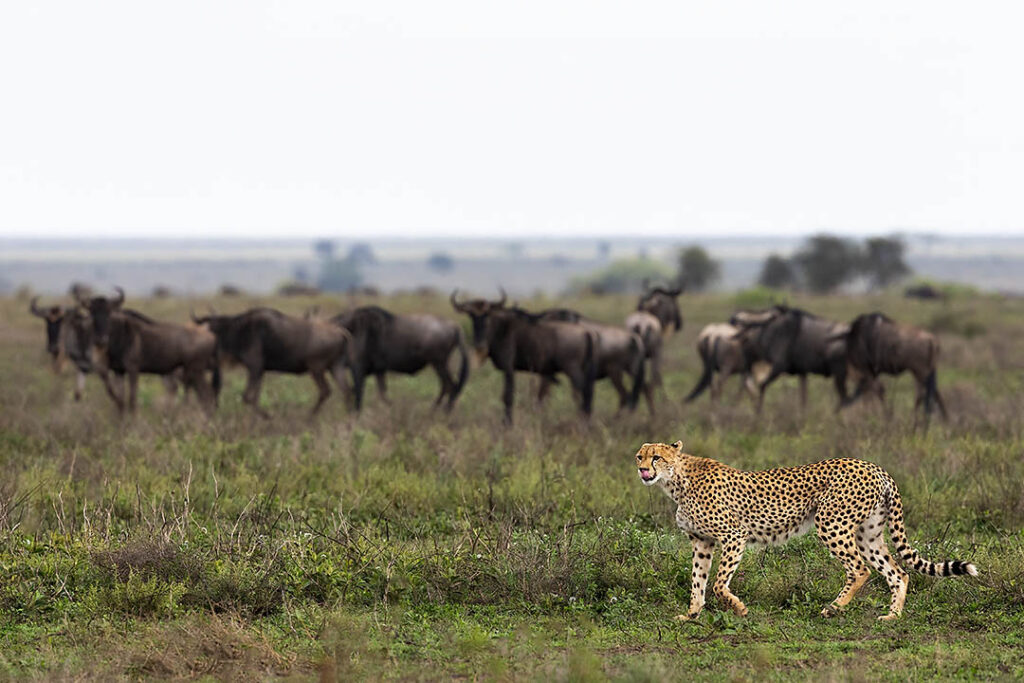
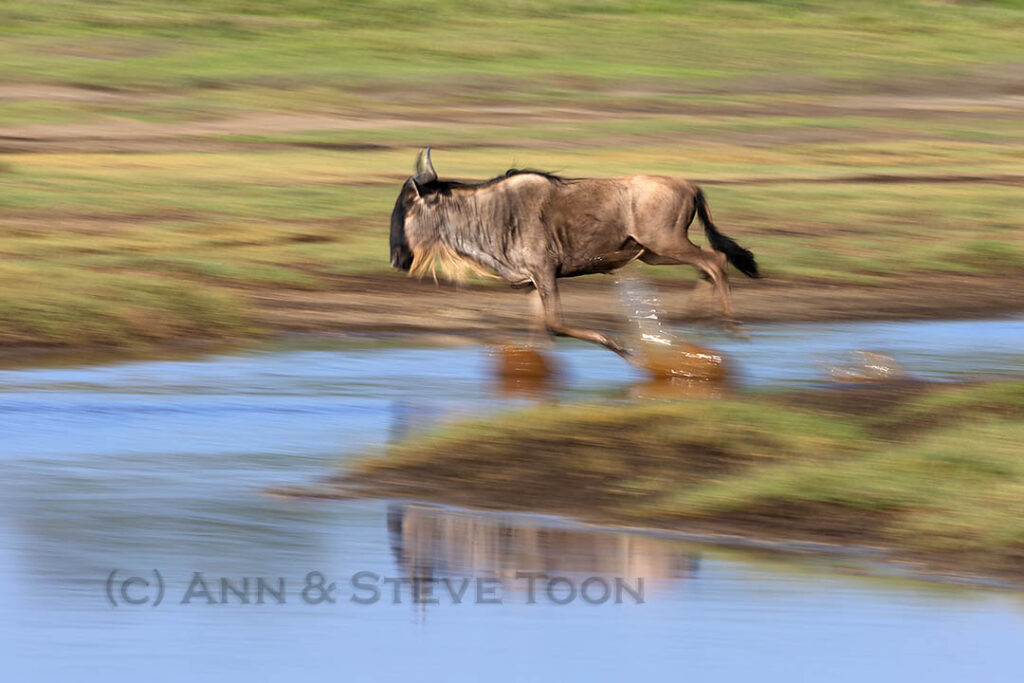
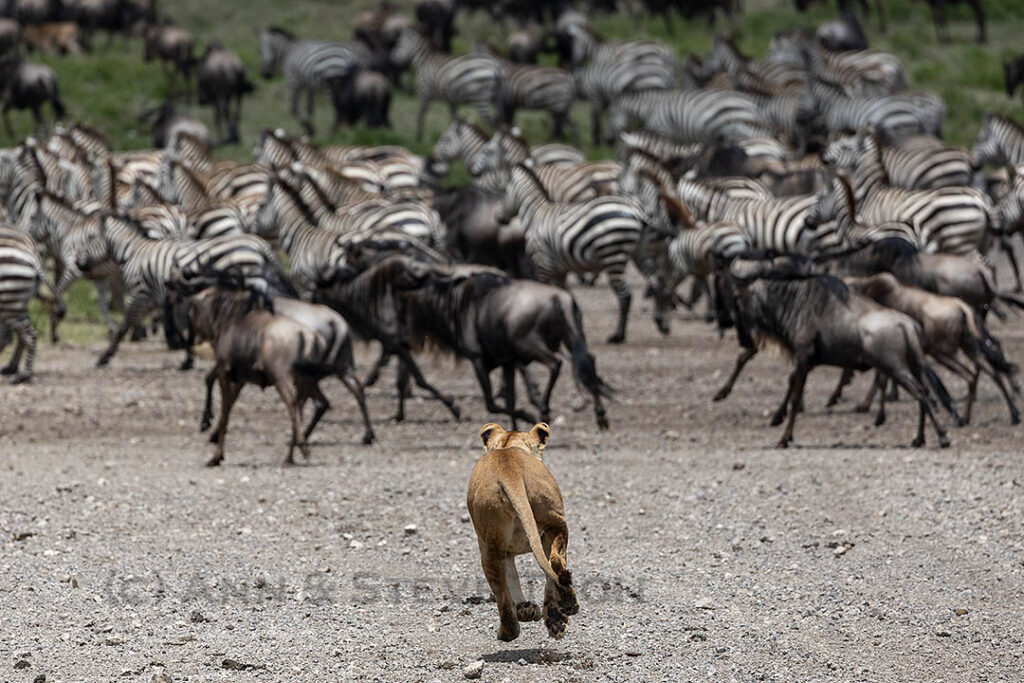
And yet it’s still proving tricky to capture the biblical scale of the teeming animals all around us. We try recession shots of endless lines of wildebeest approaching us head-on – using our telephoto lenses to foreshorten the scene for emphasis – but the wildebeest always divert last minute which lessens the impact. We do classic slow-shutter speed shots of running parallel herds and action pictures of the antelope leaping across the waters of the Long Gulley. We take portraits of tiny calves suckling and utilise a striking sunset sky one afternoon to add colour to the endless black lines of antelope threading across the plains. But once again it feels we’re falling short.
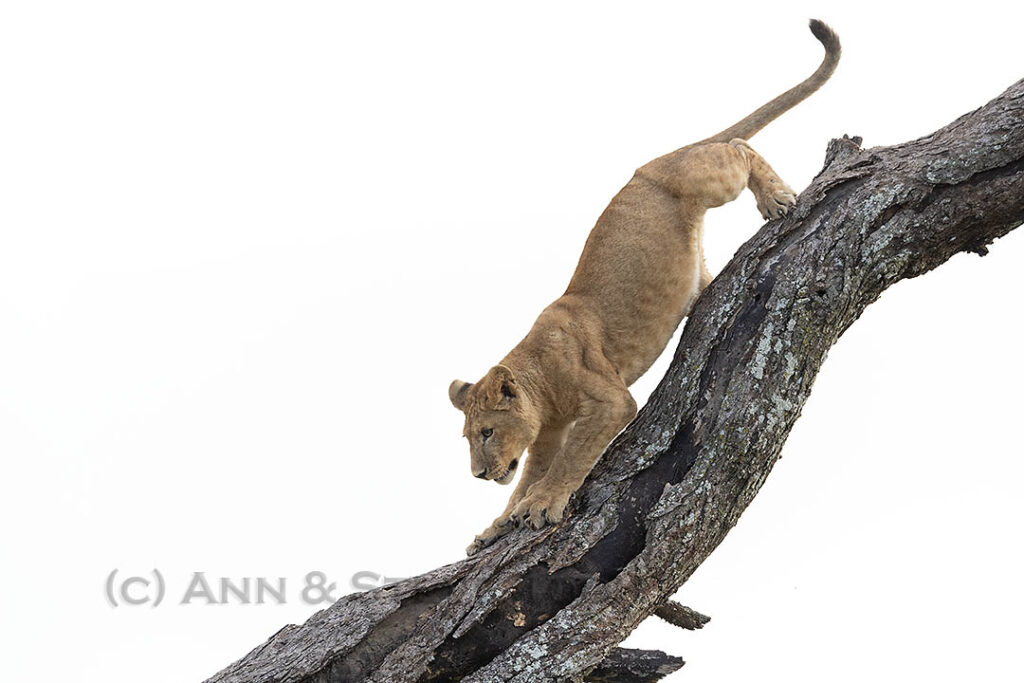
Not all our big cat photography centres on the seasonal plenty afforded by the wildebeests’ busy birthing grounds. Several afternoons we pivot from the plains in search of the Masek lion pride, famed for climbing trees to escape the heat and the abundant flies. A rare chance for some elegantly composed shots of the pride members, young and old, spreadeagled artfully along the branches – both close up and at wider angles. It’s not a common sight to find lions up in the trees so we make the most of hot afternoons when we know they’ll be getting high.
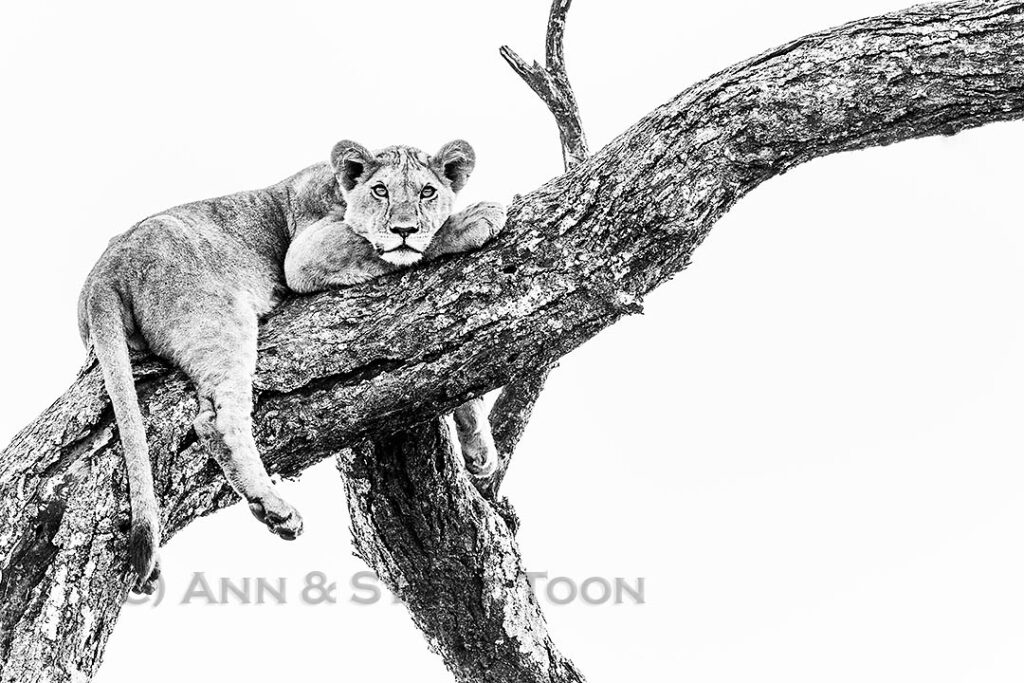
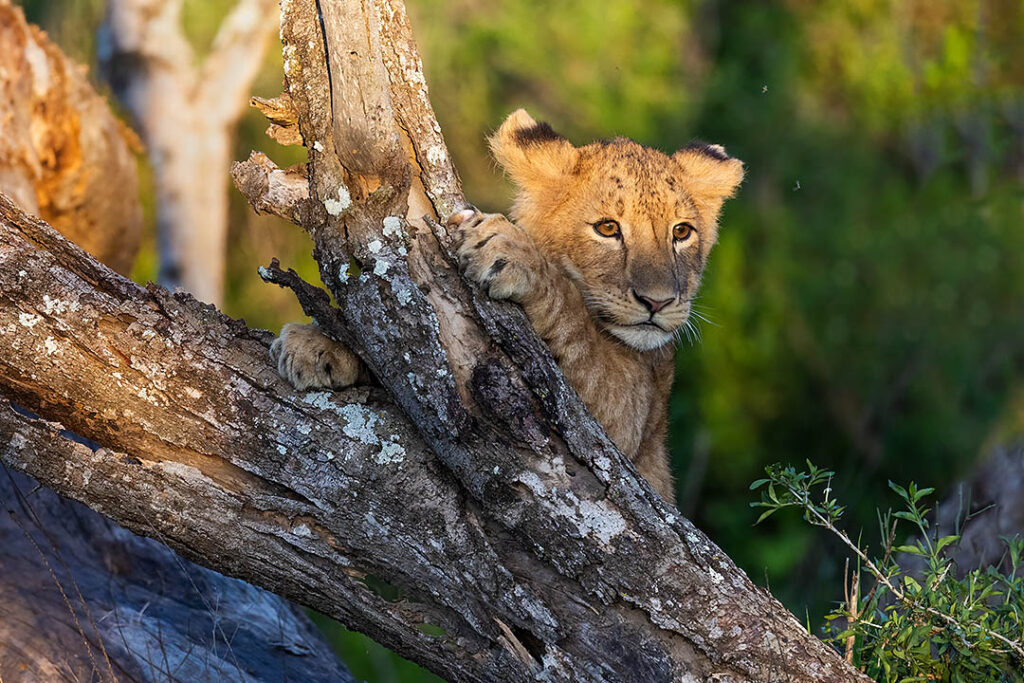
Each time we visit the pride’s hang-outs the lions are strung out along the branches – snoozing at first, but gradually waking up to give us the images we’d envisaged. It’s a question of patience rewarded, especially one afternoon towards close of play, when the adult lionesses bring out their little cubs for a surprise jungle gym session on the lower dead branches, to the delight of all.
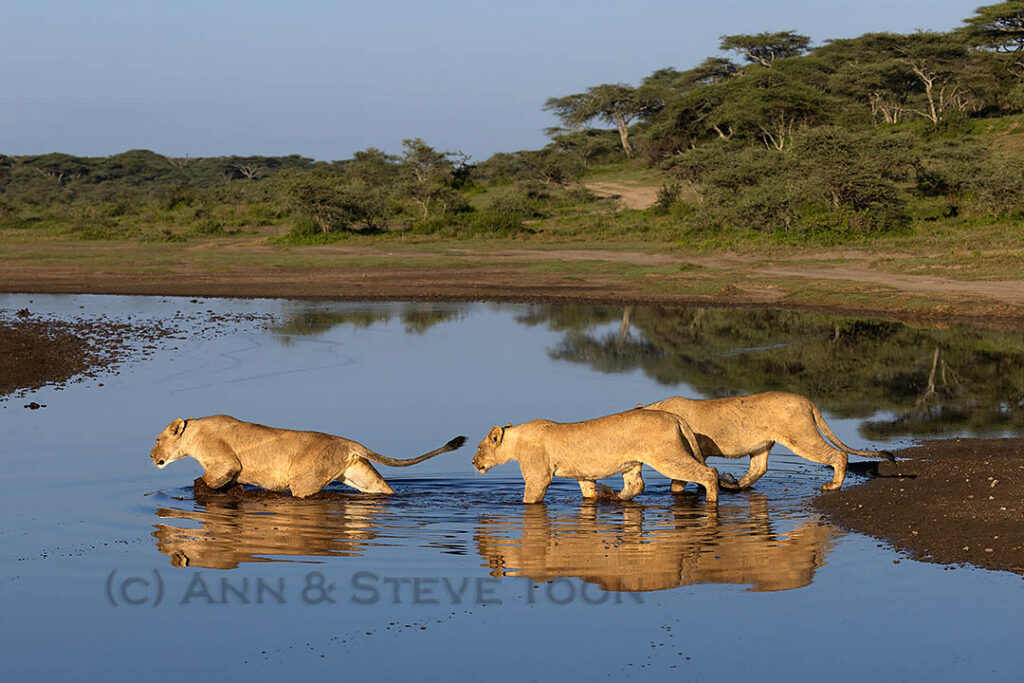
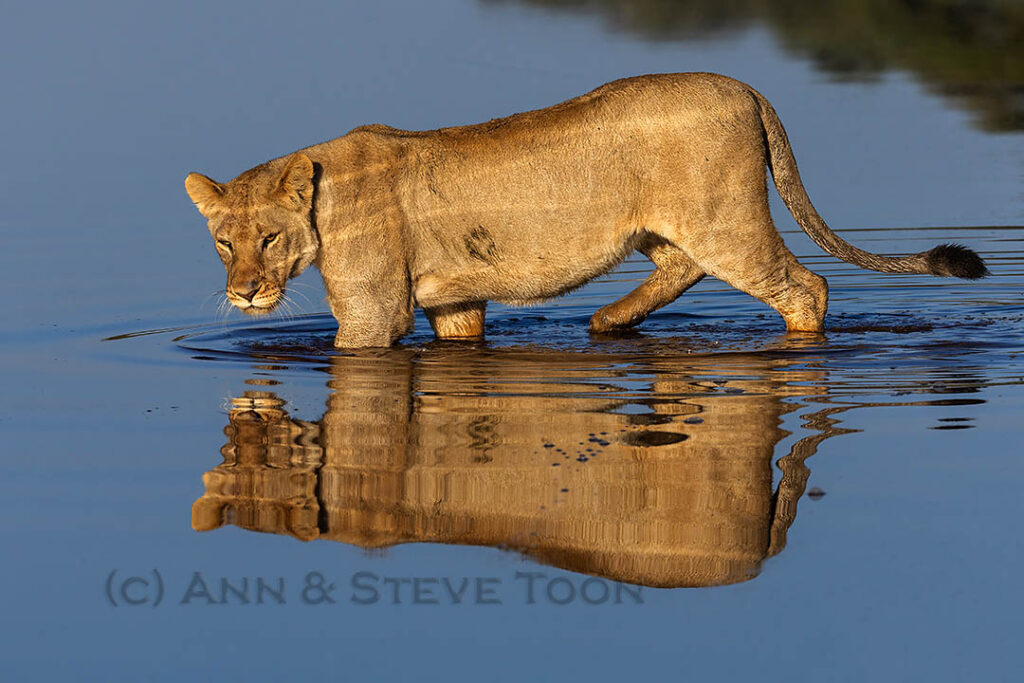
Then there’s the memorable morning along the Long Gulley (our sharp shooters love heading out this way and doing reflection shots in the water in the sweet morning light) when we encounter a group of lionesses and sub-adult cubs plucking up the courage to cross the cool water. In the early morning light the tawny fur of the lions and the bright blue of the water makes for some eye-popping portraits and something a little different from our many shots out on the open plains.
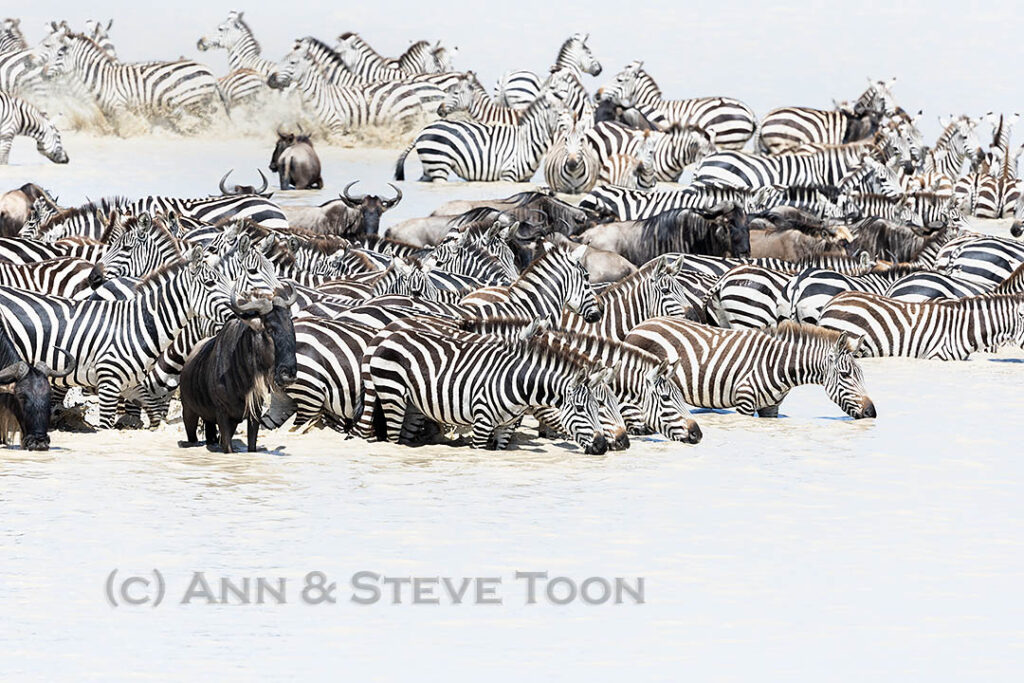
And then there’s the Hidden Valley – perhaps the highlight of the trip if only for the fact that finally we feel we’re starting to make images of the many wildebeest and zebra that match our powerful response to this epic spectacle. Our guides have predicted correctly that the antelope will come to drink at the water late morning so we dive into our breakfast boxes early as we wait, watching resting lions, their bellies full, and skies full of eagles and vultures again. When the distant antelope, currently the size of ants, come closer – then we’ll make our move.
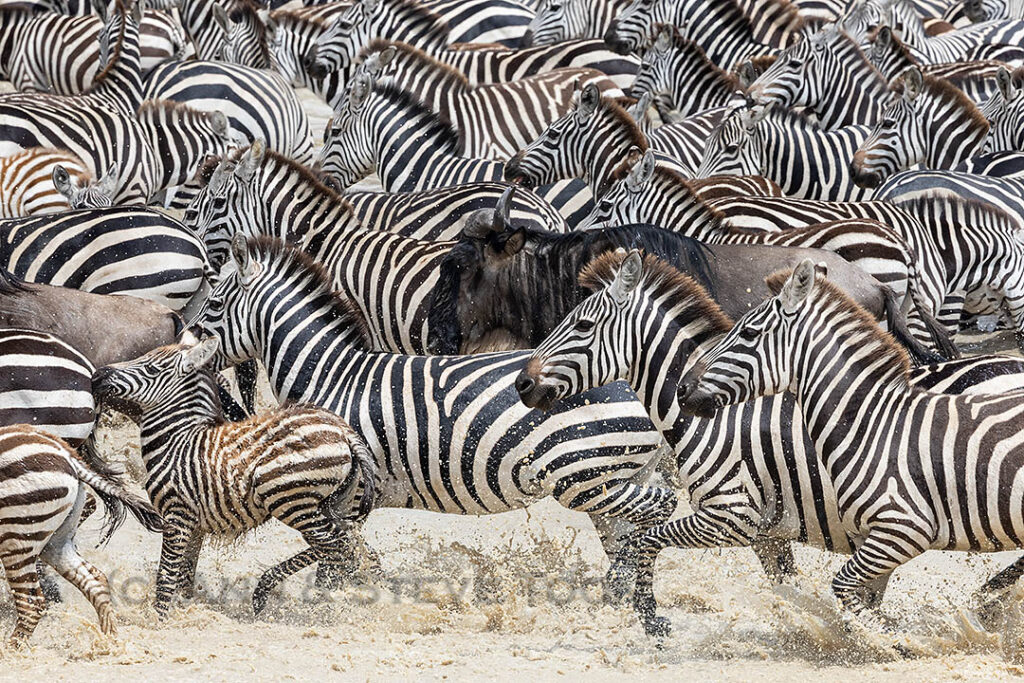
So many animals come down and the overcast skies play into our hands turning the waters white so that as the animals trek back and forth it’s as if they’re writing their own story on a blank page. Made nervy by the close proximity of a pride of lions that have already dined on two of their number the plains game consistently spook on approaching the water in a crush of bodies. The spray and splashes somehow catch both the fear and the beauty we’ve wrestled to lock down satisfactorily on our memory cards so far.
Of course our pictures at Hidden Valley will never tell the complete story of the Great Migration on Ndutu. How could they? But there’s something about this Hidden Valley place that makes our pulses race and our photography finally get on its feet – just like all those tiny wildebeest calves we’ve been watching unfolding from the ground in their first flush of being.
Please note that our 2027 Great Migration trip to Ndutu will now include three nights at a camp close to the world famous Gol Kopjes with the chance to photograph the lions renowned for posing on these stunningly photogenic rocks. That’s in addition to spending nine nights on Ndutu itself.
Now it’s the important task of thanking our great guides and gorgeous guests. Asante sana to both Arnold and Gabriel for all that driving and for finding us some amazing wildlife while always putting us in the most picturesque breakfast spots when we needed to refuel.
Thanks also to all our glorious and patient shooters. To AG whose photo study and census of Ndutu’s complete European Roller population should be hitting the shops about now, to age of steam birdman MR for acting as group fly-paper, to JR for her delightfully amusing stories, to BS for that laid back photographer-dude charm (well at least until someone gets between you and your subject then it’s truly time to duck and take cover), to DR as ever for the Zen-like calm, for still unearthing the coolest finds at breakfast spots and for really rocking those beautiful high-key shots. And final thanks to our resident perfectionist AR for sharing every bit of needless, nagging self-doubt with the group. We truly love your attention to detail.
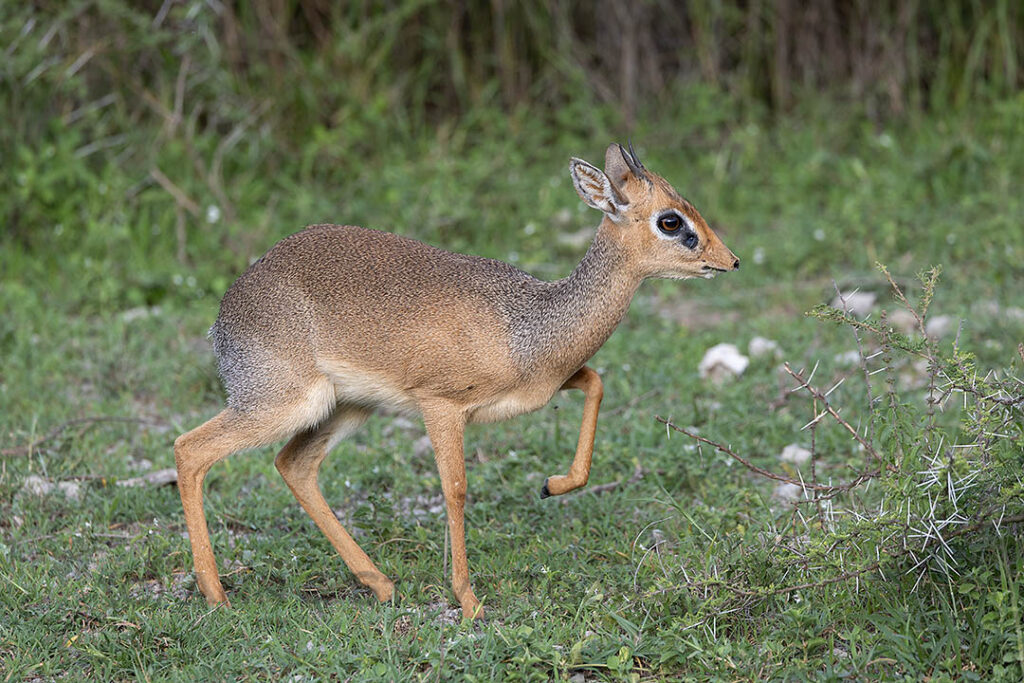
A joyous ‘Dik-dik’ to you all!


Leave a Comment